Australian Systemic Functional Linguistics Association Incorporated
Past events from the SPCE SIG
JUNE 2026 webinar
From Shock to Peaceful Action: Enacting Moral Realignment and Social Cohesion Through Political Discourse
The meeting was recorded.
Presenters: Dr Elizabeth A. Thomson and Dr Ingrid Wijeyewardene
While discourses of war, hate and revenge are ubiquitous in the public domain and, have been adopted by some world leaders, what is sorely missing is a discourse that genuinely sets out to peacefully restore social cohesion, compassion and understanding and bring people together in harmony.
To fill this gap, this paper investigates a speech delivered by Robert (Bobby) F. Kennedy to a rally organised in a Black ghetto in Indianapolis in 1968 to identify the linguistic features of his impromptu speech. The speech had a profound impact on the mainly Black audience that had gathered for a campaign rally, many of whom had not yet heard of Martin Luther King’s assassination (Warrenburg 2009). Drawing on systemic functional linguistic approaches to genre, lexicogrammar and discourse semantics, the analysis highlights the linguistic choices which clearly demonstrate how a persuasive text enacts a moral realignment away from hate and anger to empathy, compassion and the fostering of social harmony. At a time when cities all over the USA erupted into violent clashes after MLK’s assassination, remarkably, Indianapolis was one of the few cities to remain calm (Warrenburg 2009), considered to be largely a result of Kennedy’s speech.
REFERENCES
Warrenburg, Kristine Marie, “April 4, 1968: Death, Difference, and Dialogue” (2009). Electronic Theses and Dissertations. 950. https://digitalcommons.du.edu/etd/950
SEPTEMBER 2025 webinar
“A suggestion for a new linguistic field, critical animal linguistics” AND “Constructing the laboratory animal: The representation of the agency of nonhuman animals in the Report on vivisection”
Presenter: Anna Runsio
The meeting was recorded.
Presenter: Anna Runsio
School of Languages and Translation Studies, University of Turku, Finland
The presentation is made up of two parts. The first part will be about my suggestion for a new linguistic field, critical animal linguistics, and is based on an article that I am working on.
The killing, harming and exploitation of nonhuman animals is occurring on an unprecedented scale, and language plays a key role in enabling this. Nevertheless, there is relatively little linguistic research that critically examines the status of nonhuman animals. As a means of legitimising and advancing such research, I propose a new field of linguistics that seeks to end the oppression and discrimination of nonhuman animals: critical animal linguistics.
I will first discuss why critical animal linguistics is needed. Then I will explore two possible reasons for the scarcity of that type of research: first, the tendency of ecolinguistics to see nonhuman animals as resources or as members of their species, not as individuals; and second, the way nonhuman animals are represented in Halliday’s seminal article “New Ways of Meaning: The Challenge to Applied Linguistics” (1990). I will also introduce some of the previous studies that in my view represent critical animal linguistics.
In the second part of the presentation, I will talk about my ongoing PhD project “Constructing the laboratory animal: The representation of the agency of nonhuman animals in the Report on vivisection“.
Despite the ever-increasing knowledge of nonhuman animals’ cognitive and emotional capacities, more than 190 million of them are used annually in animal experimentation worldwide (Taylor and Alvarez, 2019. In Britain, the pioneer of regulating animal experimentation, 2 681 686 procedures were performed on vertebrates in 2023; based on the pain, suffering or distress experienced by the individuals, 49 701 procedures were classified as severe (Home Office 2024, data tables).
My doctoral dissertation focuses on the 1870s, when animal experimentation was still an unestablished method in Britain and the principles for legitimate use of research animals were under vigorous negotiation (on the history of animal experimentation in Britain and the debate around it, see, for example, French, 1975). In 1875, the Royal Commission on Vivisection was established for advising the government on the issue; this led to the 450-page Report on vivisection (Great Britain 1876) and the enactment of the world’s first legislation regulating animal experimentation, The Cruelty to Animals Act, 1876 (Cruelty to Animals Act 1876).
Instead of protecting animals, however, The Act protected experimentation by legitimising it, advancing its institutionalisation and helping it become the standard research method it still is. To understand better the factors behind the enactment and the consequences of the pioneering legislation, I study how the nonhuman animals themselves ‒ and their agency in particular ‒ are represented in the Report. As my main linguistic framework, I use the transitivity system (Halliday and Matthiessen 2014). I will discuss the motivation for the study, its historical background, my primary material, my approach to agency (on agency, see e.g. Špinka 2019) and some of the preliminary findings related to my data.
French, Richard D. 1975. Antivivisection and Medical Science in Victorian Society. Princeton: Princeton University Press.
Great Britain. 1876. Report of the Royal Commission on the practice of subjecting live animals to experiments for scientific purposes: with minutes of evidence and appendix. London. H.M.S.O. Accessed 1 Sep 2025. https://archive.org/details/b21302893/mode/2up.
Halliday, M.A.K. [1990] 2006. “New Ways of Meaning: The Challenge to Applied Linguistics.” In Ecolinguistics Reader: Language, Ecology and Environment, edited by Alwin Fill and Peter Mühlhäusler, 175–202. London: Bloomsbury Publishing.
Halliday, M.A.K., and Christian M.I.M. Matthiessen. 2014. Halliday’s Introduction to Functional Grammar. 4th ed. London: Routledge.
Špinka, M. 2019. “Animal agency, animal awareness and animal welfare.” Animal Welfare 28, no. 1: 11‒20.
Taylor, Katy, and Laura Rego Alvarez. 2019. “An Estimate of the Number of Animals Used for Scientific Purposes Worldwide in 2015.” Alternatives to Laboratory Animals 47, no. 5‒6: 196‒213.
July 2025 webinar
Acknowledging the past to heal the future: A case study on the Colombian Truth Commission
The meeting was recorded.
Authors: Alexandra García Marrugo (presenter), The University of Sydney; Annabelle Lukin, Macquarie University.
Abstract: Truth commissions are a modern concept and are typically established after periods of military rule or civil war to investigate patterns of severe human rights abuses. By definition, they offer a space for new and counter-hegemonic discourses that aim to offer healing and, in many cases, reconciliation (Hayner, 2010). The first recognised commission was established in Uganda in 1974 to investigate disappearances during the takeover of power by Idi Amin, who disregarded its findings and kept the report from the public (Hayner, 1994). While there are current debates as to what should count as a truth commission (Kochanski, 2020), a recent estimate suggests that 90 truth commissions have been conducted in over 70 countries (Dancy & Thoms, 2022), with Latin America being a notable region where nations from Argentina to Guatemala have implemented such commissions.
The impact and outcomes of truth commissions is varied and complex to assess (Bakiner, 2016, 2021; Wiebelhaus-Brahm, 2010). While some have been acknowledged as contributors to accountability for human rights abuses as in Nigeria, others have been identified as promoters of impunity, as in El Salvador (Bakiner, 2014). This talk will present an overview of truth commissions in Latin America, and then take the example of the Colombian ‘Commission for the Clarification of Truth, Co-existence and Non-repetition’ (‘Comisión para el esclarecimiento de la verdad, la convivencia y la no repetición’, CEV henceforth) established in 2017 as a result of the peace process with the guerrilla group FARC. This presentation will investigate the kinds of discursive spaces that the CEV has opened up, and consider how these may offer opportunities both for new understandings of the Colombian conflict, as well as new opportunities for complex dialogues to take place. We conclude by reviewing the evidence for the effectiveness of these discursive spaces for healing (Guthrey, 2015; Sarkin, 2019). clear and that we can begin to think about strategies for defusing some of the ferocious identity madness currently displacing the more charitable humanity we so desperately need to foster, home and away.
Biography: Alexandra García is Senior Lecturer (Education-focussed) and Learning Hub Lead (Academic Language at Learning) at The University of Sydney. In addition to research in the field of academic support for tertiary students, she investigates language and ideology in relation to organised violence from the perspective of Systemic Functional Linguistics and Corpus Linguistics.
REFERENCES
Bakiner, O. (2014). Truth Commission Impact: An Assessment of How Commissions Influence Politics and Society. International Journal of Transitional Justice, 8(1), 6–30. https://doi.org/10.1093/ijtj/ijt025
Bakiner, O. (2016). Truth Commissions: Memory, Power, and Legitimacy. University of Pennsylvania Press.
Bakiner, O. (2021). Truth Commission Impact on Policy, Courts, and Society. Annual Review of Law and Social Science, 17(1), 73–91. https://doi.org/10.1146/annurev-lawsocsci-111620-010000
Dancy, G., & Thoms, O. T. (2022). Do truth commissions really improve democracy? Comparative Political Studies, 55(4), 555–587. https://doi.org/10.1177/00104140211024305
Guthrey, H. L. (2015). Victim Healing and Truth Commissions: Transforming Pain Through Voice in Solomon Islands and Timor-Leste. Springer International Publishing AG.
Hayner, P. B. (1994). Fifteen Truth Commissions–1974 to 1994: A Comparative Study. Human Rights Quarterly, 16(4), 597–655. https://doi.org/10.2307/762562
Hayner, P. B. (2010). Unspeakable Truths: Transitional Justice and the Challenge of Truth Commissions. Routledge.
Kochanski, A. (2020). Mandating Truth: Patterns and Trends in Truth Commission Design. Human Rights Review, 21(2), 113–137. https://doi.org/10.1007/s12142-020-00586-x
Sarkin, J. (Ed.). (2019). The Global Impact and Legacy of Truth Commissions (Vol. 24). Intersentia. https://doi.org/10.1017/9781780687957 Wiebelhaus-Brahm, E. (2010). Truth Commissions and Transitional Societies: The Impact on Human Rights and Democracy. Routledge. https://doi.org/10.4324/9780203862025
May 2025 webinar
Secular communion: so much trouble in the world
Speaker: Professor J R Martin, Department of Linguistics, University of Sydney
Abstract: In this paper I will take stock of work on bonding developed in Systemic Functional Linguistic (SFL) studies of the coupling of attitude and ideation and the generative role of these couplings in negotiating community, taking into account recent work on the technicalisation and iconisation of feeling (as axitech and bondicon respectively) – by way of exploring how much progress we are making in the development of SFL as a genuinely social theory of language.
Professor Jim Martin
I write this as an elder aghast at the ways in which belongings of particular kinds draw on ‘e/vilification’ to cultivate fear and hate and thereby engender a ‘licence to kill’ which trumps values which we might otherwise share as basic human rights.
To begin I will develop the discussion in relation to sport, where the consequences of iconising the inside and outside of a community are somewhat less severe. By the end of the paper I hope that the implications of the analysis for the sorry state of our partisan world will be clear and that we can begin to think about strategies for defusing some of the ferocious identity madness currently displacing the more charitable humanity we so desperately need to foster, home and away.
Biography: J R Martin is Professor of Linguistics (Personal Chair) at the University of Sydney. Professor Martin was elected a fellow the Australian Academy of the Humanities in 1998, and awarded a Centenary Medal for his services to Linguistics and Philology in 2003.
October 2024 webinar
Peace, Compassion, and Empathy in Social Media amidst Crises Times: An SFL Approach
Speaker: Dr Yara Abdelsamie, Arab Academy for Science, Technology and Maritime Transport, Egypt
Abstract: Social media platforms serve as crucial spaces for shaping cultural narratives and constructing messages during crises. This webinar presents two studies that explore how users employ linguistic and semiotic resources on social media to promote values like peace, compassion, and empathy.
Through the lens of Systemic Functional Linguistics (SFL), the webinar examines how social media elements convey messages of empathy and understanding. The analysis focuses on linguistic choices, specifically Transitivity processes and visual elements in videos, along with symbols, hyperlinks, and hashtags in textual content, during the Israeli attacks on Palestinians following the October 7th Hamas attacks.
The first study analyses the impact of Mohamed Salah’s video message, showcasing how a globally influential football player can influence his audience’s perceptions and stance.
The second study investigates how hashtags create ambient affiliations by embedding values through an SFL approach (lexicogrammatical and visual elements).
The findings reveal how social media users strategically use language and semiotic resources to spread messages of peace, compassion, and empathy in response to social crises.
Biography: Dr Yara Abdelsamie earned her PhD in Applied Linguistics from the Universidad Autónoma de Madrid and is a full-time faculty member in the Department of Language and Translation at the College of Language and Communication, Arab Academy for Science, Technology and Maritime Transport, Egypt. She has presented at numerous international conferences and actively contributes to the West African Systemic Functional Linguistics Interest Group (WASFLIG). Dr Abdelsamie is recognised for developing a pioneering model for analysing political tweet genres. Currently, she is collaborating on interdisciplinary projects that integrate Systemic Functional Linguistics with psychology and other fields. Her research interests include Corpus Linguistics, Systemic Functional Linguistics, Political Discourse Analysis, and Pragmatics.
July 2024 webinar
Identifying and analysing language in use: Using the tools of systemic functional semiotics (SFS) in positive discourse analysis
Speakers: Associate Professor Elizabeth Thomson, University of Wollongong, and Dr Awni Etaywe, Charles Darwin University, Darwin, NT
This session was designed as a masterclass for scholars new to SFL in the discourses of empathy and compassion or those who are interested in broadening their repertoire of SFS tools applied to new contexts. The masterclass aimed to demonstrate the practical application of SFL tools in analysing and understanding the role of language in digital activism and empathic discourse, and provide scholars with valuable insights and methodologies for their research.
Dr Etaywe demonstrated appraisal and affiliation analysis—analytical tools for (de)coding the evaluative language in (multimodal) texts to shed light on interpersonal meaning. As Martin and White (2005:1) describe, “appraisal is concerned with the construction by texts of communities of shared feelings and values, and with the linguistic mechanisms for the sharing of emotions, tastes, and normative assessments.” Dr Etaywe illustrated how evaluative language is used in digital activist discourse to enact moral affiliation and urge acts of compassion as a coordinated response to wrongdoing. Additionally, the session highlighted how language reveals the morality of activism and allegiance to the goals and guiding values of particular social movements.
Dr Thomson discussed how to interrogate the textual metafunction, specifically demonstrating Theme/Rheme and Thematic progression analysis methods. The periodic nature of the textual metafunction ‘organises meanings into waves of information’ (Martin and White 2005:19) some foregrounded as New and other chunks of information backgrounded as Given. Dr Thomson demonstrated parsing into clauses, identification of the various kinds of Themes, and how Themes create particular patterns of thematic progression which serve particular rhetorical purposes.
Webinars / reading groups conducted in 2024
Date
Hosted by
Topic
30/05/2024
Dr Claudia Ortu
The place of feelings: Empathetic discourse as a strategy for trade union organising
Webinars / reading groups conducted in 2023
Date
Hosted by
Topic
5/05/2023
Penny Wheeler
Multimodal communication of empathy (Boeriis 2021)
Action and activism: disentangling and critiquing empathy and compassion (Gruen 2013; Curtin 2022)
6/10/2023
A/Prof Elizabeth Thomson
Empathic listening as a social semiotic practice in the tradition of Nonviolent Communication: An analysis of choices in thematic progression and information structure (Rosenberg 2015)
Webinars / reading groups conducted in 2022
Date
Hosted by
Topic
24/06/2022
Awni Etaywe
‘Compassion’ and the development of compassion (Bandura, 2016)
12/08/2022
Dr Elizabeth Thomson
Working towards a Systemic Functional description of the word ’empathy‘ (Pounds, 2010)

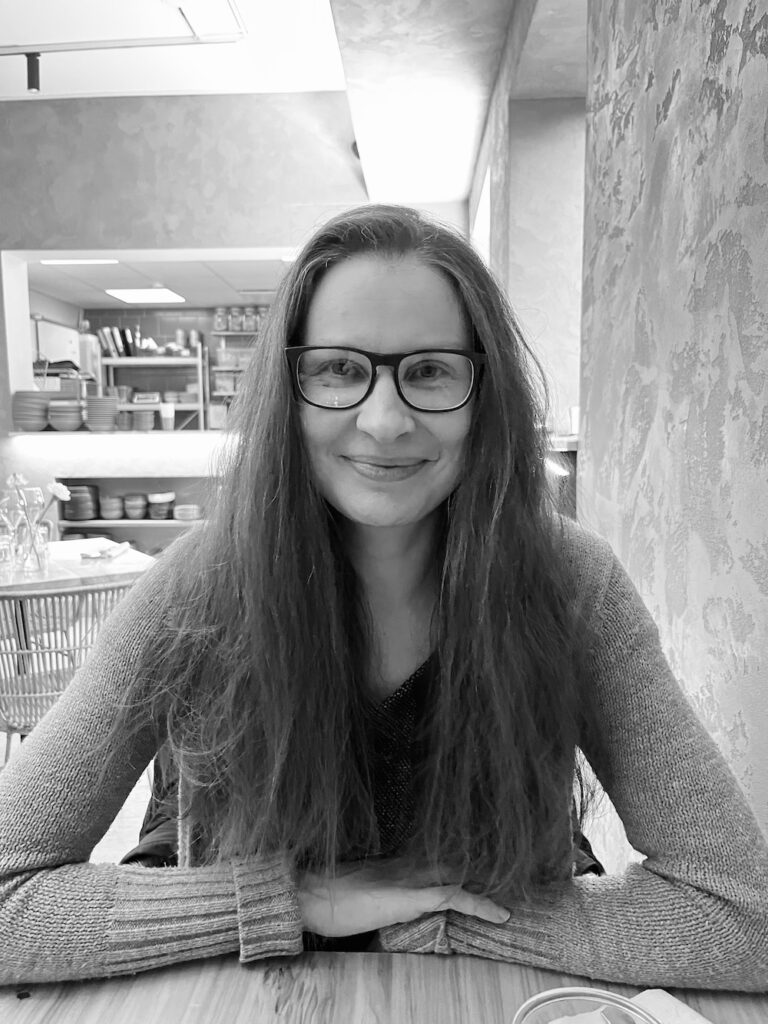
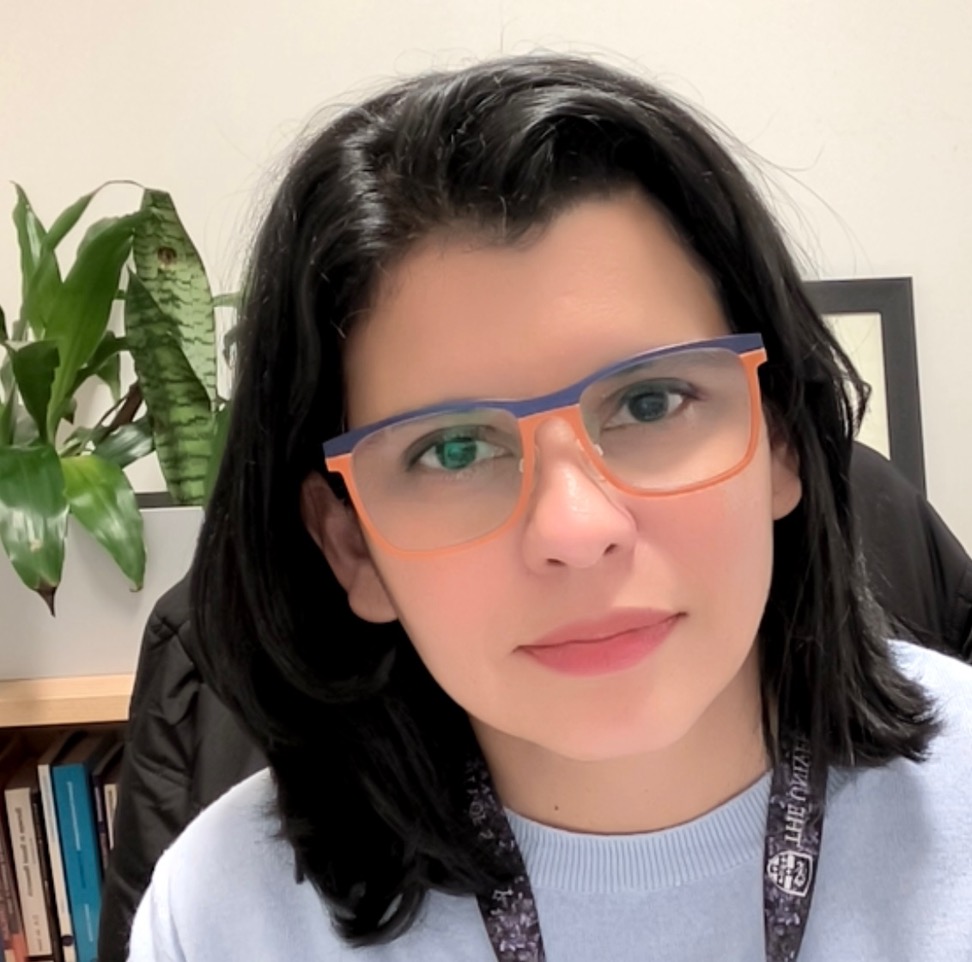 Abstract: Truth commissions are a modern concept and are typically established after periods of military rule or civil war to investigate patterns of severe human rights abuses. By definition, they offer a space for new and counter-hegemonic discourses that aim to offer healing and, in many cases, reconciliation (Hayner, 2010). The first recognised commission was established in Uganda in 1974 to investigate disappearances during the takeover of power by Idi Amin, who disregarded its findings and kept the report from the public (Hayner, 1994). While there are current debates as to what should count as a truth commission (Kochanski, 2020), a recent estimate suggests that 90 truth commissions have been conducted in over 70 countries (Dancy & Thoms, 2022), with Latin America being a notable region where nations from Argentina to Guatemala have implemented such commissions.